The Yamuna’s Cultural Significance
The Yamuna River holds great cultural and historical importance for the people of Delhi. There is a long standing connection between the physicality of the river and the collective imagination and cultural signification of the Yamuna in the daily lives of its population.
Proximity of the river has significantly affected the physical development of the city throughout its multiple dynasties, while the river has become central to many religions’ symbolic and ritualistic ceremonies.
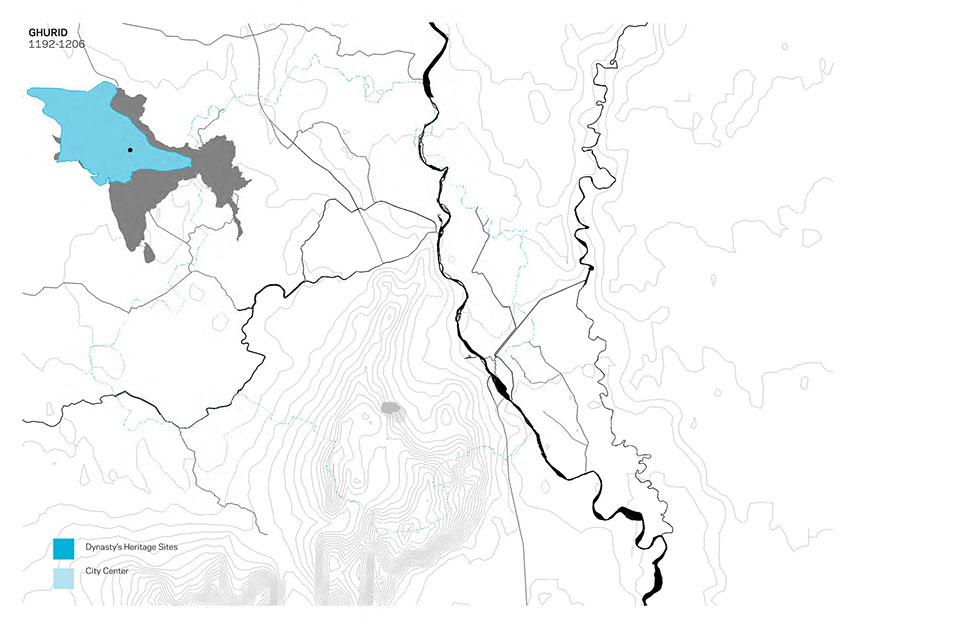
Mapping Delhi Through Indian Empires
see more >
“The Yamuna River has been an important subject in Indian art from at least the fourth or fifth century on; either as a goddess, or as a river that is itself a site of important events in the lives of gods and goddesses; in the lives of people who live along its banks; in the lives of emperors and princesses, who built forts and palaces and tombs on its banks.
The Yamuna River occupied the Indian consciousness for millennia, and it is still the subject of contemporary art investigation in multiple disciplines.”
Daniel Ehnbom, Associate Professor of Art History, UVA
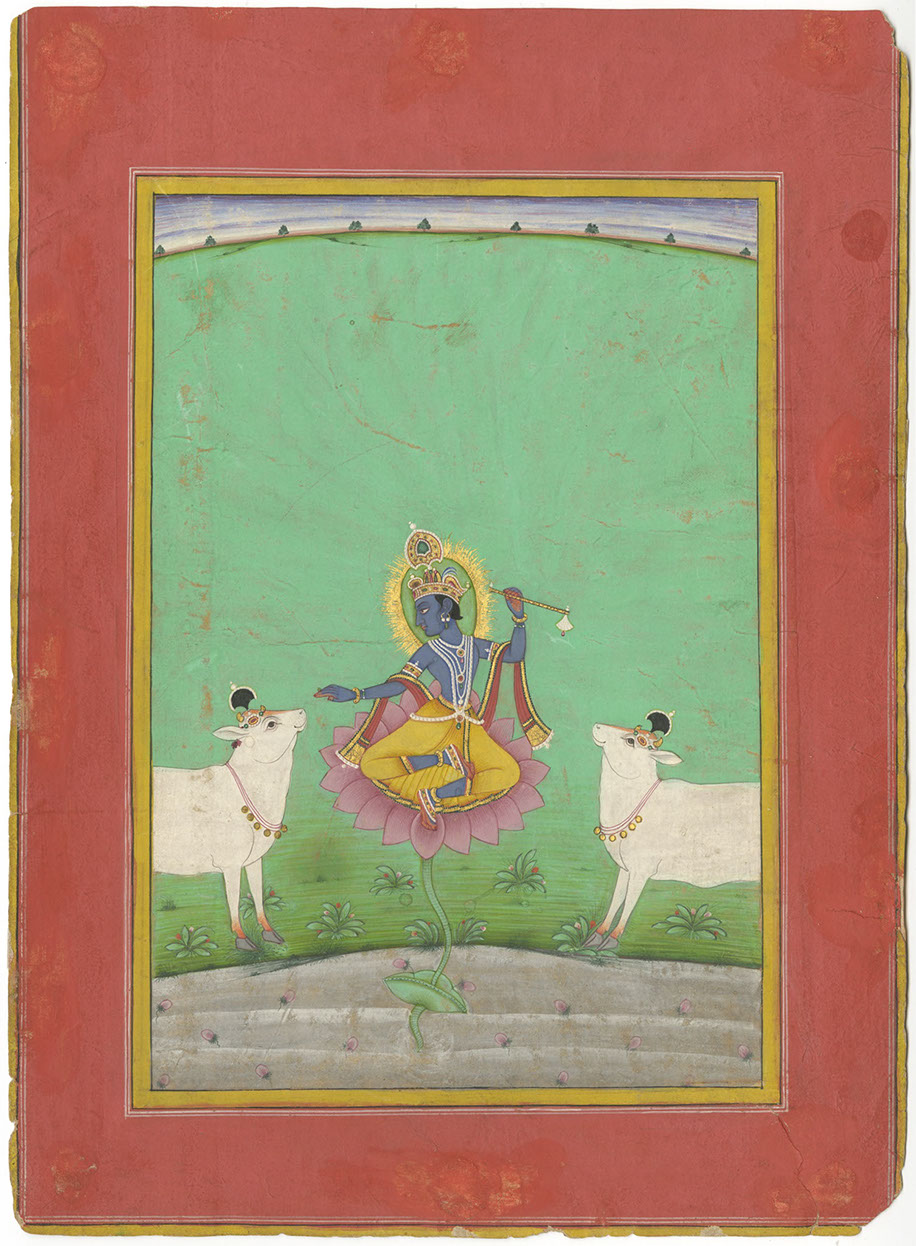
The Dark Goddess of the River
Krishna as Venugopala, the flute playing cow- herder, at the bank of the Yamuna. By Hasam, son of Mamadin, dated 1766 CE. India, Rajasthan, Bikaner. Opaque color and gold on paper. Private collection.
Delhi’s Urban Environment
Delhi’s unnatural problem is produced by intertwined problems in four areas: water quality, air quality, lack of planning, and food security. These can be characterized by two related issues of quality and inequality. These issues must be analyzed for both their direct impact on the environment, as well as their implications on the health, economy, politics, and quality of life of Delhi citizens.
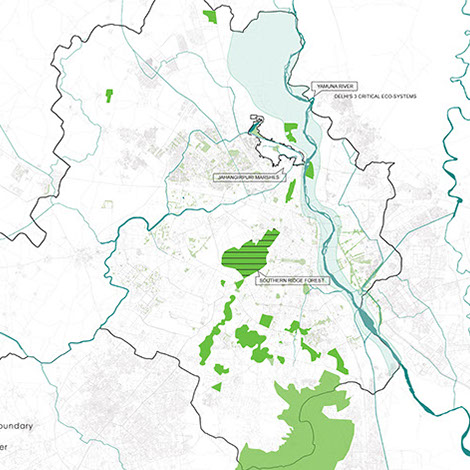
Delhi's Urban Dilemma: Ecology + Public Space
see more >

Urban Edges: Delhi's Nallas in Images
see more >

Delhi's Urban Dilemma: Waste
see more >

Agriculture in Delhi
see more >
Infrastructure
The city’s rapid population growth has incapacitated its ability provide and maintain infrastructure capable of handling its size. As a result, infrastructure has been implemented retroactively rather than designed for the continued future growth of the city. This continuous cycle of infrastructure “catch-up” restricts the city’s ability to develop as a modern metropolitan center.
“From 1951 to 2016, the city’s population grew from 3 million to 18.6 million. India’s capital has been unable to invest in the infrastructure necessary to properly service its proliferating population.”
John Echeverri-Gent, Associate Professor of Politics, UVA
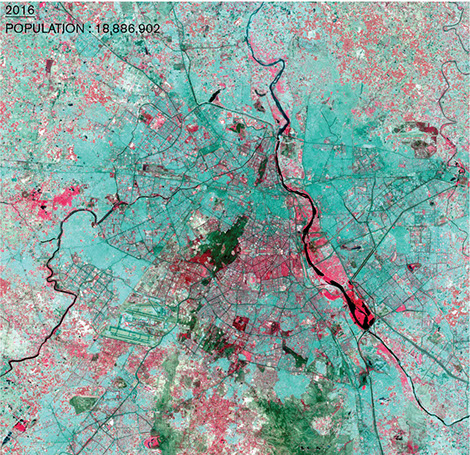
Delhi's Exponential Expansion
see more >

Mapping Density of Delhi’s Urban Fabric
see more >

Mapping Delhi’s Basic Mobility Systems
see more >

Mapping Delhi's Health and Education
see more >
Water Supply + Treatment
The rapid population growth has also limited Delhi’s ability to provide an adequate supply of clean drinking water for the entirety of its population or properly treat the quantity of produced sewage, while aging infrastructure is unable to treat water at full capacity. Diversion of clean water for drinking and irrigation has significantly reduced the natural flow of the Yamuna and its tributary drains. The limited flow is not able to dilute the level of solid waste and effluents that is released into it, effectively turning the Yamuna into an open sewage drain.
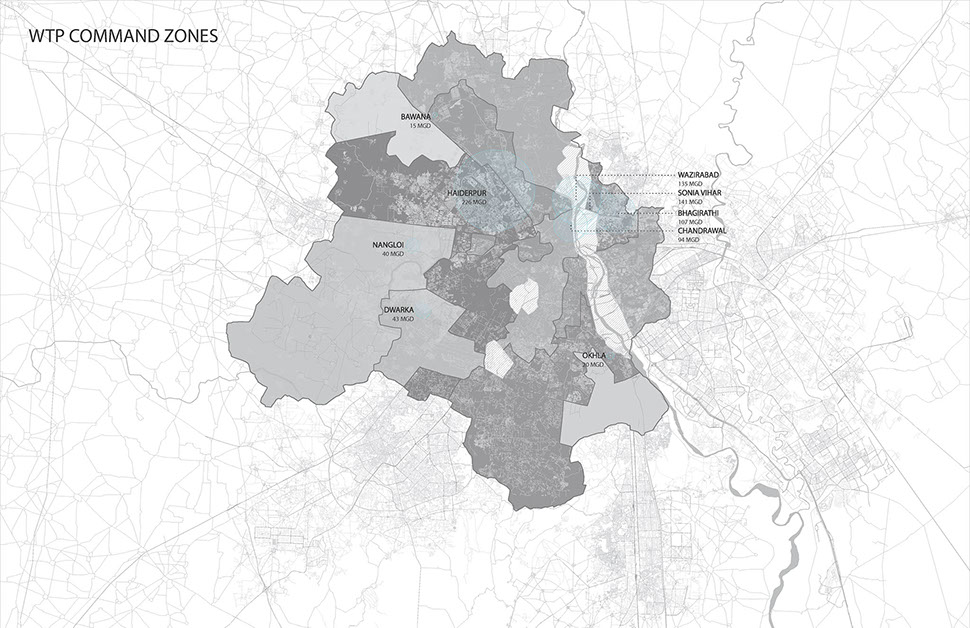
Mapping Delhi's Drinking Water Infrastructure
see more >

Mapping Delhi’s Sewage Infrastructure
see more >
Governance + Economics
The complexity of Delhi’s government and social structure creates a difficult and often contested dialogue revolving around solutions for the Yamuna River crisis. Conflicting goals and intentions and opposing stakeholders often leave potential solutions at a standstill. Stakeholders will need to engage in an attitude of compromise, communication, and transparency with each other and the population they serve in order to develop a solution to Delhi’s ecological concerns.
“Addressing water challenges is not always a question of improving supply. Better management of water resources may reach into areas such as transportation infrastructure or development policies that are not always thought of as the purview of water policy.”
Peter Debaere, Associate Professor, Darden School of Business, UVA

Delhi’s Governance and Efforts to Revitalize its Yamuna
see more >

The Economics of Water: A Programmatic Outlook
An article by Peter Debaere in the Yamuna River Project publication talks about water-friendly economic policies and efficient allocation of agriculture and other sectors based on water availability in specific regions. Advocating the need for regulating and limiting water access and charging appropriate prices for it to serve all socio economic classes in a city and raising the question of how to allocate water more efficiently and equitably.