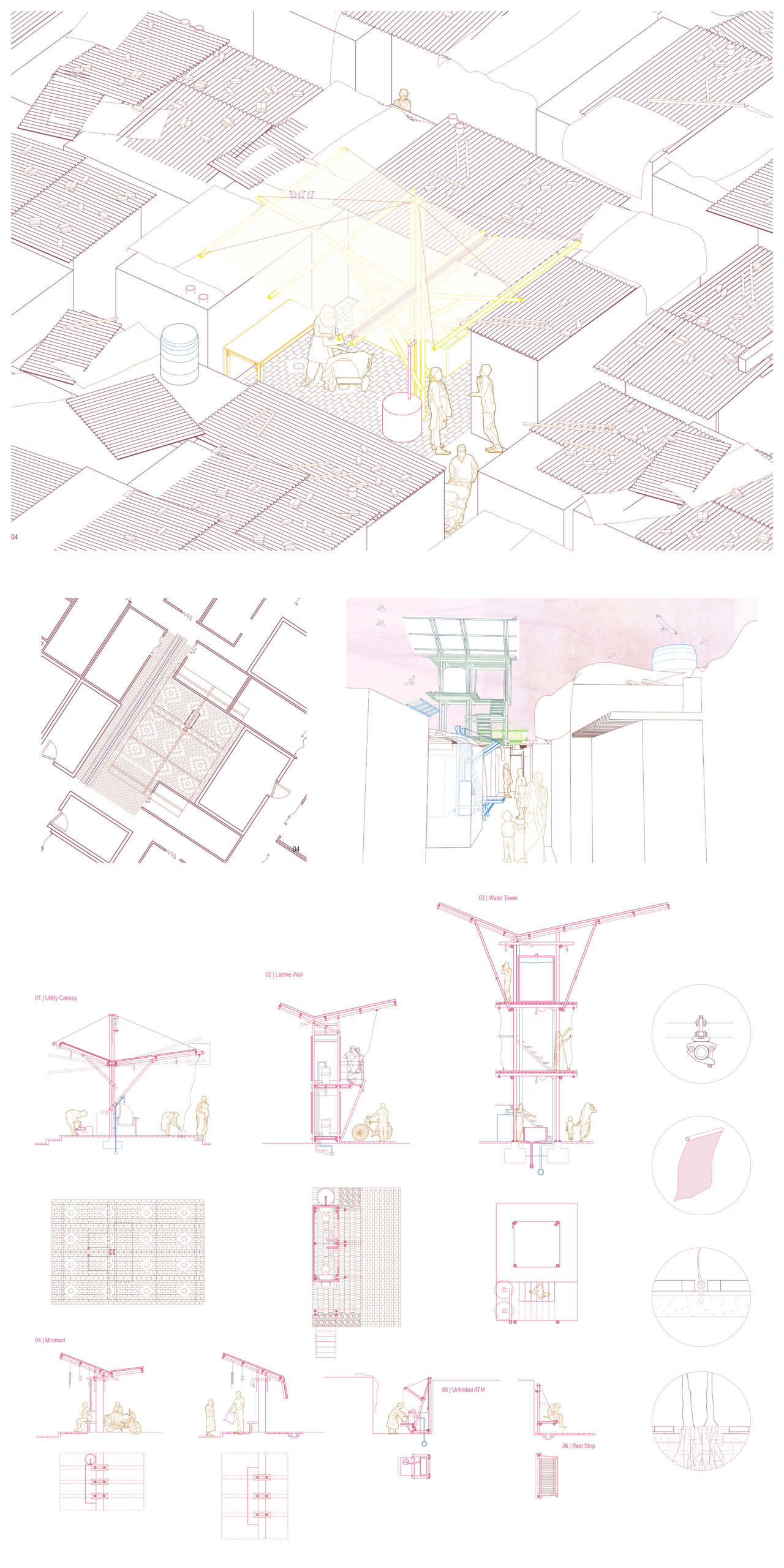
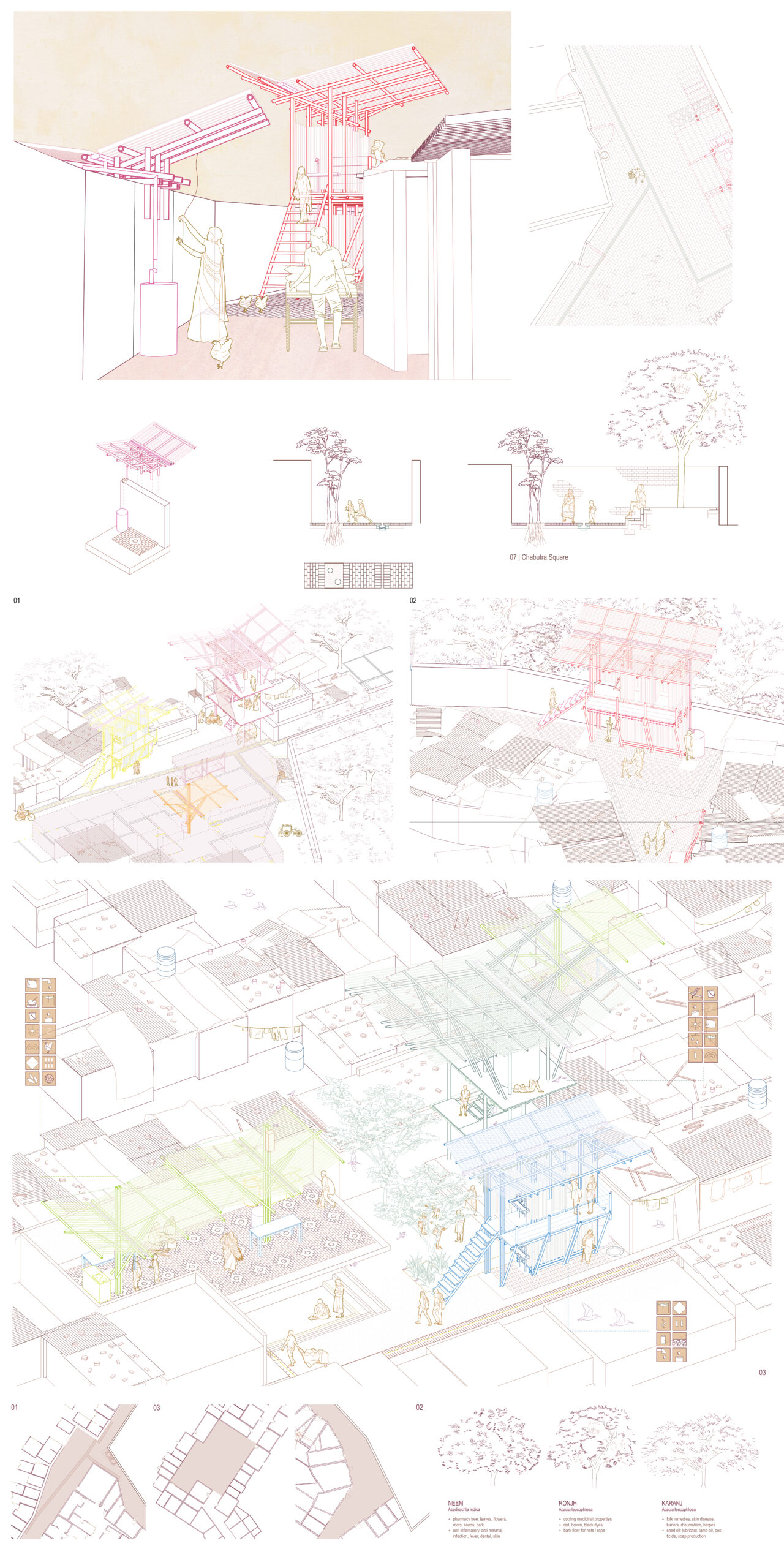
This project seeks to create a network of critical infrastructure and space that legitimizes the daily life of people living in Noor Nagar. The infrastructures are carefully woven into the dense informal settlement, occupying where the domestic and public space begins to blur. While each intervention is carefully tailored, their strength is in functioning as a network.
The project starts with the introduction of a series of latrines and a new sewer line to the nearby sewage treatment plant. The streets themselves will be paved and connected by an open drain that carries water to certain drainage points where they can be treated. The infrastructures are flexible in nature and aren’t over-programmed, but have the capability to be water access points, provide shade, illumination, waste collection and composing — and ultimately opportunities to extend the domestic space with cooking, laundry, and critically bathrooms.

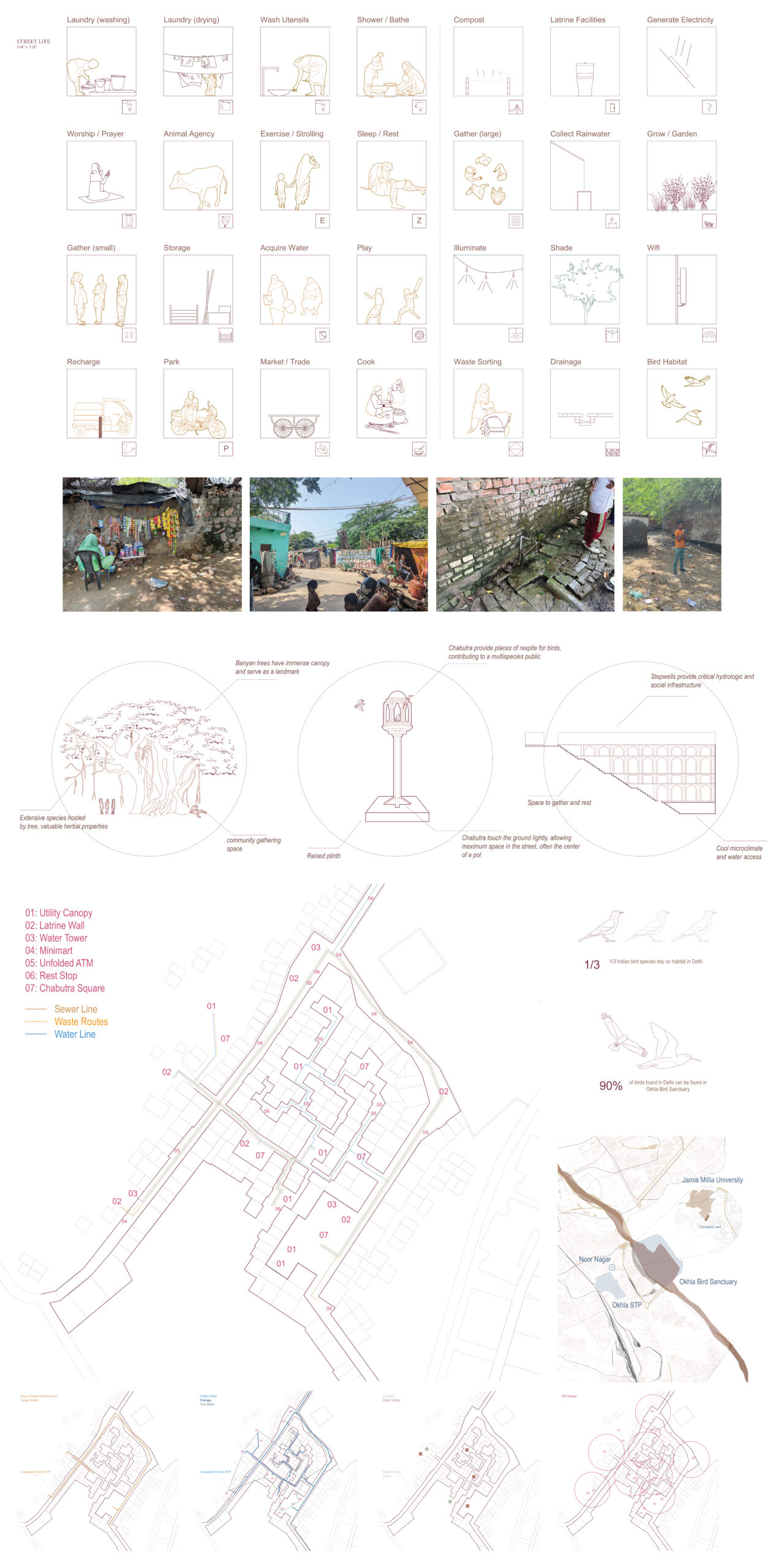
Inspiration was drawn from Mughal water management where water becomes the connecting tissue of social life and functions, the banyan tree, an immense canopy as a place to gather, and the chabutra where the idea of touching the ground lightly and using plinths comes into play. In many ways, this project is a re-translation.
The catalog illustrates prototypes of the intervention, with the sort of utility canopy being one intervention and something as simple as a bench or water arm illustrating the breadth of interventions. Finally, the interventions act as orientation devices by their color, with the water towers capable of being seen throughout the village. Each intervention carefully mediates its connection to the ground through the use of brick patterns inspired by islamic tile work.
Ultimately, the project positions that a robust, elemental system of infrastructure and social space can provide the foundation for legitimate living and future change.