Recycled water in rural delhi is fundamental to increase food/water security of the region. By following the directionality of flow of waste agricultural and domestic water, it was discovered that lines were developed based on modified contour lines. These lines could be designed to control, collect, and filter water arriving at the lake through linear ponds and vegetation design. Water would be treated through a system of ponds designed to handle varying levels of pollution and three conditions of water levels, dry, regular, and wet.
The park would provide recreational function while simultaneously raising awareness about agricultural and water issues through the transparency of water recycling and agricultural processes. Wholesale markets would be designed within the park to decrease food waste and increase food security awareness.

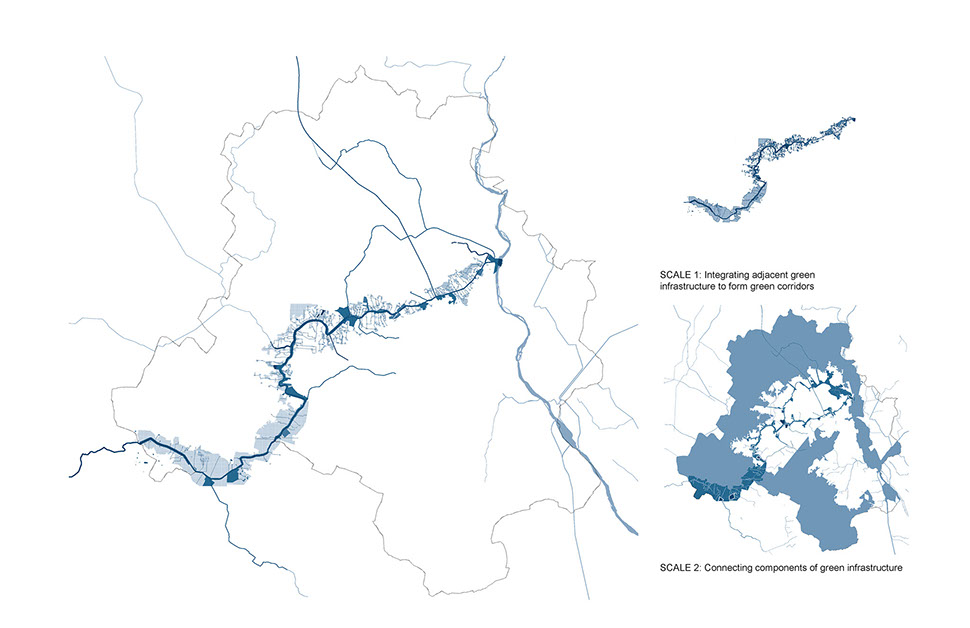
Envisioning the Najafgarh Drain as the Najafgarh-Sahibi River
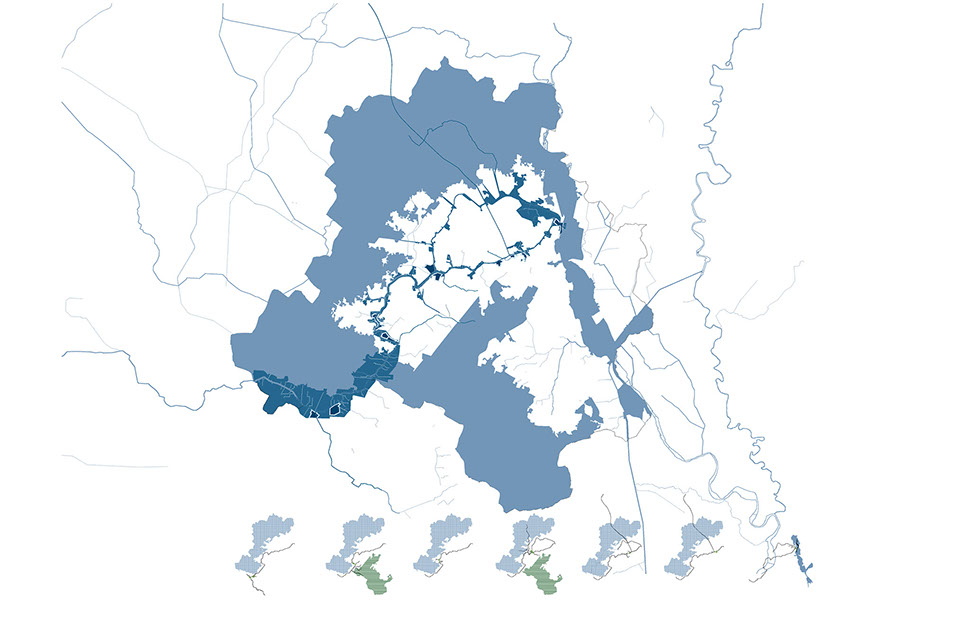
Connecting Green Infrastructure in Adjacent Areas to Create a Green Corridor
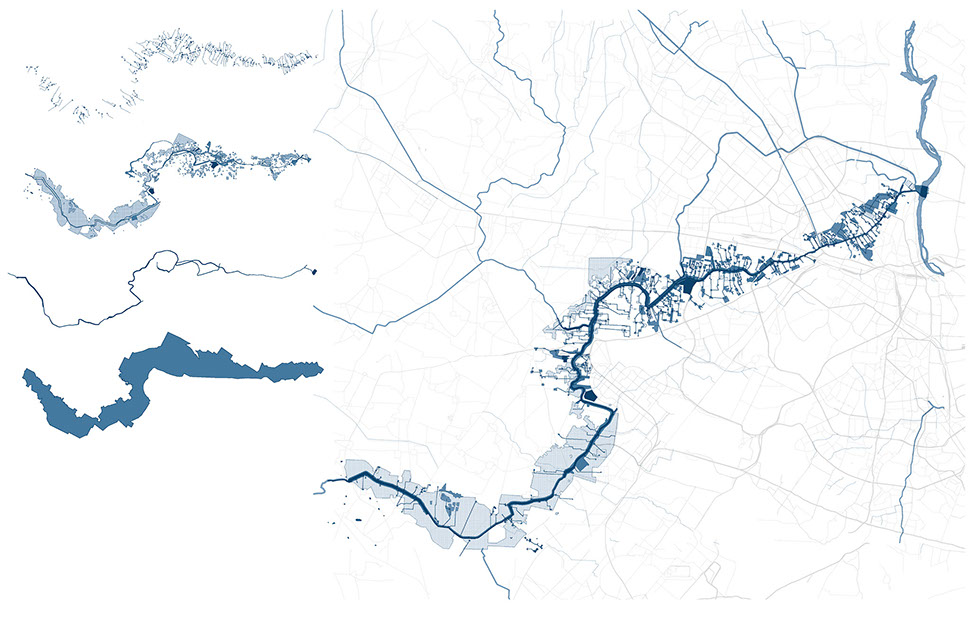
Critical Nodes Connecting Components of Green Infrastructure

Building Capillaries
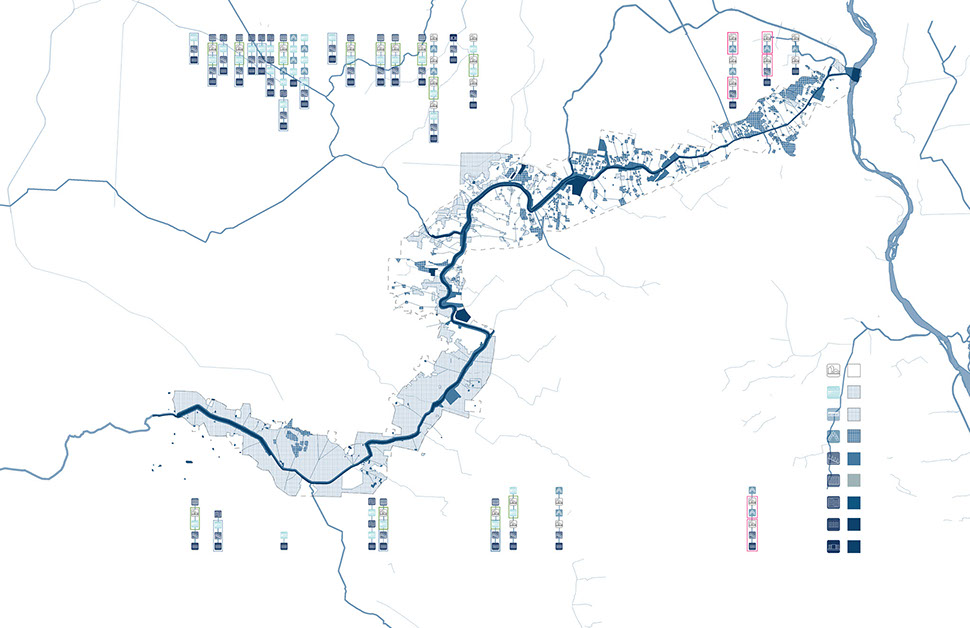
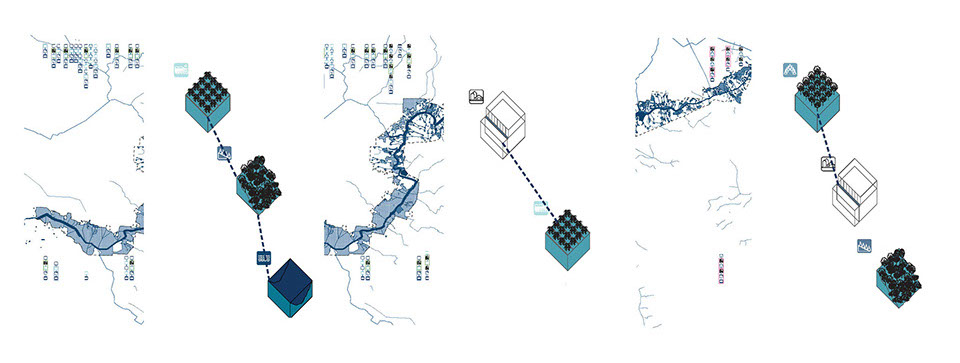
Intermodal Connections
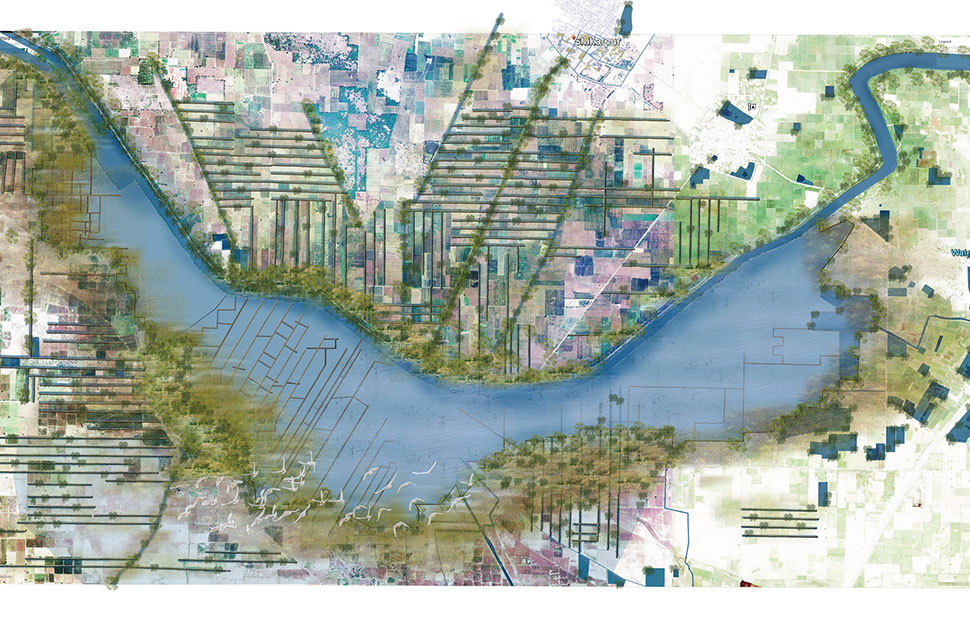
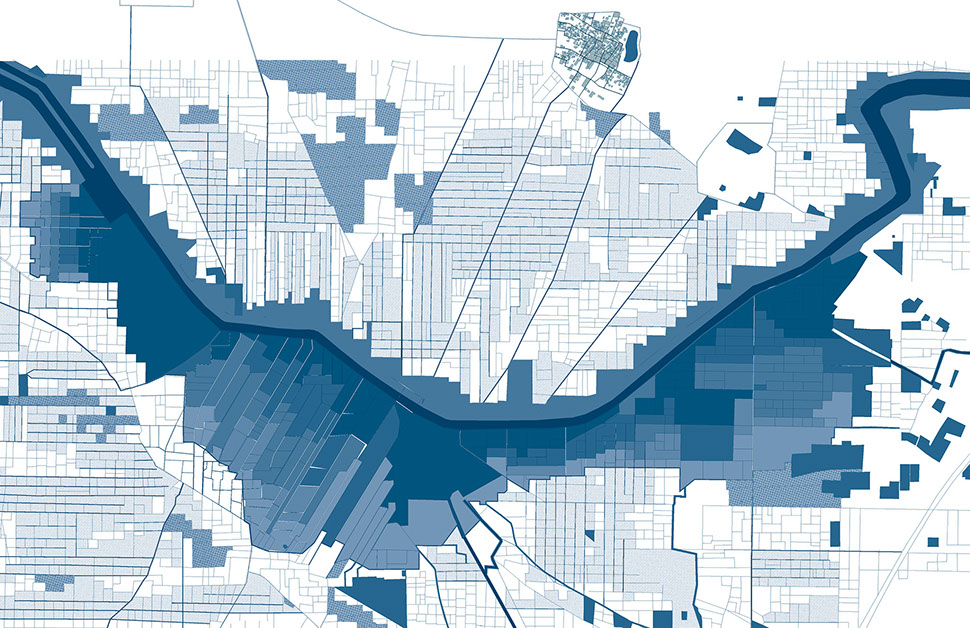
Site Map of Najafgarh Lake


Najafgarh Lake Average Flood Ranges
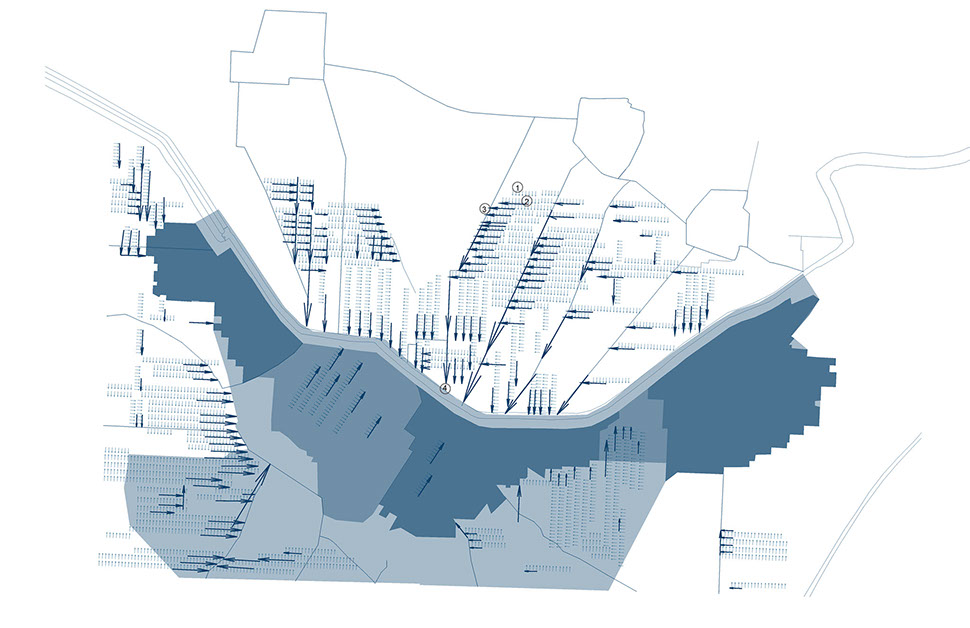

Agricultural Run-off + Canal System
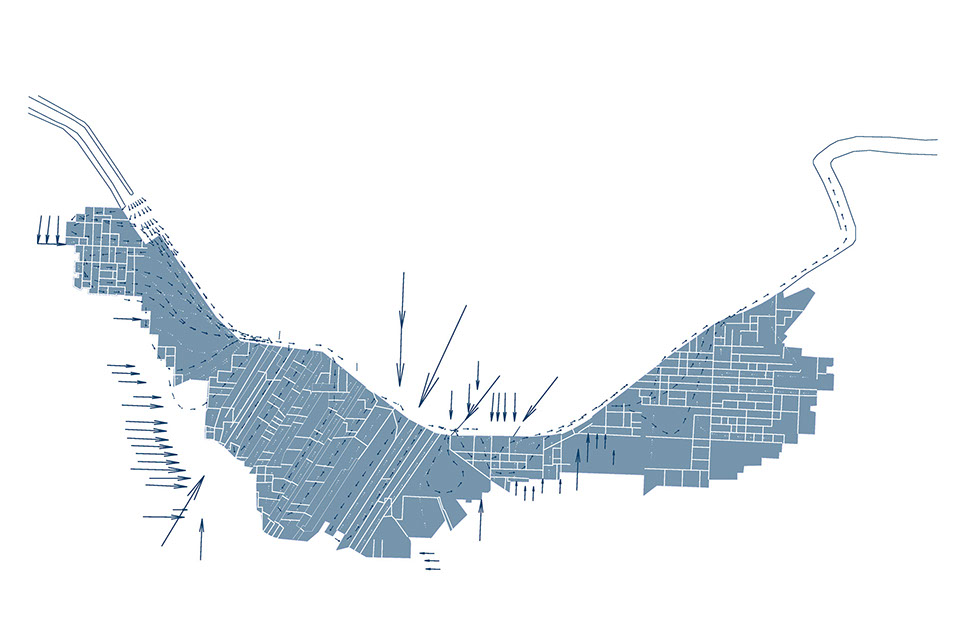
Second Treatment of Agricultural Overflow